
Yaad hai jab hum sochte the ki har jagah QR code scan karna ek “badi baat” hai? Well, that was just the trailer. If you think the shift from cash to UPI was massive, hold on tight. The next five years are going to fundamentally rewrite how we live, work, and interact with the world around us.
We are standing at a fascinating intersection right now in 2026. India isn’t just a massive consumer of global technology anymore; we are aggressively building it. The focus has shifted from just ‘Make in India’ to ‘Innovate from India’.
Agle paanch saalon mein hamari life kitni badalne wali hai? It’s not about flying cars (at least, not yet for the masses); it’s about practical, deep-rooted changes that will affect everything from our morning commute to how our farmers grow crops. Let’s break down the massive tech shifts coming our way by 2030.
The Problem: Outgrowing Our Current Infrastructure
Right now, we are hitting the limits of our current digital framework. Our cities are choking, our healthcare system is overburdened in rural areas, and while we have cheap data, the quality of digital services often breaks under the pressure of 1.4 billion people.
We don’t need incremental updates anymore. We need massive leaps. We need systems that can predict traffic jams before they happen, medical tech that works flawlessly in a village with spotty electricity, and financial tools that cater to the gig economy natively. The trends we are about to discuss are specifically designed to solve these uniquely Indian bottlenecks.
The Big Shifts: What to Expect by 2030
Here are the core technologies that will move from “experiment phase” to “everyday reality” across India.
1. The Real Rise of ‘Phygital’ Infrastructure
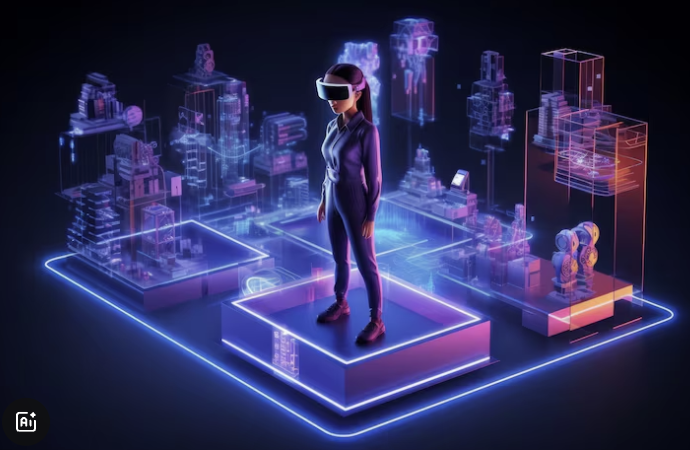
Forget the metaverse hype of the past; the real trend is ‘Phygital’—the blending of physical and digital worlds. Imagine ONDC (Open Network for Digital Commerce) expanding beyond just food and groceries.
In the next five years, local kirana stores will operate as mini-fulfillment centers linked to hyperlocal drone delivery networks. You won’t just track your package on a map; the entire supply chain will be visible. Local dukaan ka trust aur Amazon jaisi speed—that’s the hybrid model taking over retail.
2. Generative AI as a Personalized Utility
Right now, GenAI is like a very smart intern. By 2030, it will be an embedded utility. We will see AI completely localized for India.
Think about an AI tutor that teaches complex physics to a student in rural Bihar, speaking pure Maithili, adjusting to the student’s exact learning pace. Or a legal AI that helps a small business owner draft a contract in simple Hindi without needing a high-priced lawyer. AI ab English bolne wale elites ke liye limited nahi rahega.
3. Smart Grids and the Green Energy Push
India’s aggressive push toward renewable energy isn’t just about solar panels on roofs. The real tech trend is the “Smart Grid.”
Within five years, your home won’t just consume electricity; it will manage it intelligently. If you have an EV, your car’s battery might feed power back into the grid during peak hours when tariffs are high, and charge itself late at night when power is cheap. The software managing this energy exchange will become as common as managing a bank account.
4. Space-Tech Privatization (The Indian SpaceX Moment)
ISRO has always been our pride, but the private space sector in India is currently where the US was a decade ago. Companies like Skyroot and Agnikul are just the beginning.
Why does this matter to you? Because within five years, private Indian satellites will drastically drop the cost of broadband internet. We are talking about high-speed, low-latency satellite internet reaching the absolute remotest parts of the Northeast or the deep valleys of Himachal. No more “no network zone.”
Practical Examples of This Future
- Healthcare: A patient in a Tier-3 town visits a local clinic. A doctor in Mumbai reviews their AI-enhanced MRI scan in real-time, while a robotic surgical arm, controlled remotely via an ultra-low latency 6G network (which will begin initial rollouts by 2029/30), performs a delicate procedure.
- Farming: A farmer in Punjab doesn’t guess when to harvest. Their field is monitored by autonomous agricultural drones that analyze soil health and spray precisely measured micro-nutrients sirf wahi jahan zarurat hai, saving costs and water.
- Transportation: Moving past basic EVs, we will see the standardization of battery-swapping networks. You pull your scooter into a station, swap the depleted battery for a charged one in 30 seconds, and ride off.
Expert Warnings: What Could Go Wrong?
While the future looks incredibly bright, experts suggest we need to be careful about a few things:
- The E-Waste Tsunami: As we rapidly upgrade to smart appliances and EVs, India faces a massive e-waste management problem. We need aggressive recycling tech, not just manufacturing tech.
- The Skills Gap: Nayi tech toh aa jayegi, par chalaayega kaun? The biggest hurdle won’t be hardware; it will be training millions of young Indians to maintain and operate these advanced AI and green tech systems.
- Data Privacy in a Hyper-Connected World: When your car, your fridge, and your watch are all talking to each other, securing that data is paramount. The upcoming iterations of India’s Data Protection Act will be constantly tested by these new technologies. (Link to your previous article on Cybersecurity here).
Important FAQs
Q: Will AI take away jobs in India in the next 5 years? A: It will definitely displace certain manual and repetitive jobs (like basic data entry or routine customer support). However, it will create massive new sectors in data management, AI auditing, and hyper-local tech maintenance. The key is upskilling.
Q: Are electric vehicles actually the future for India? A: Yes, absolutely. But the real game-changer won’t be luxury electric cars; it will be electric two-wheelers, three-wheelers (autos), and public buses backed by robust battery-swapping infrastructure.
Q: When will 6G come to India? A: While 5G is currently maturing, the groundwork for 6G is already being laid. Expect early commercial trials for enterprise use cases (like automated factories) to begin toward the end of this decade, around 2029-2030.
The Final Takeaway
The next five years in India won’t be defined by importing foreign technology, but by how we build solutions for our own unique chaos. From satellite internet bridging the rural-urban divide to localized AI speaking our mother tongues, the focus is on access and scale.
Technology wahi successful hoti hai jo aam aadmi ki life aasaan banaye. We are moving towards an era where tech becomes invisible but incredibly powerful—working quietly in the background to make our daily lives faster, cleaner, and significantly more efficient. The future isn’t just coming; it’s being coded right here.