
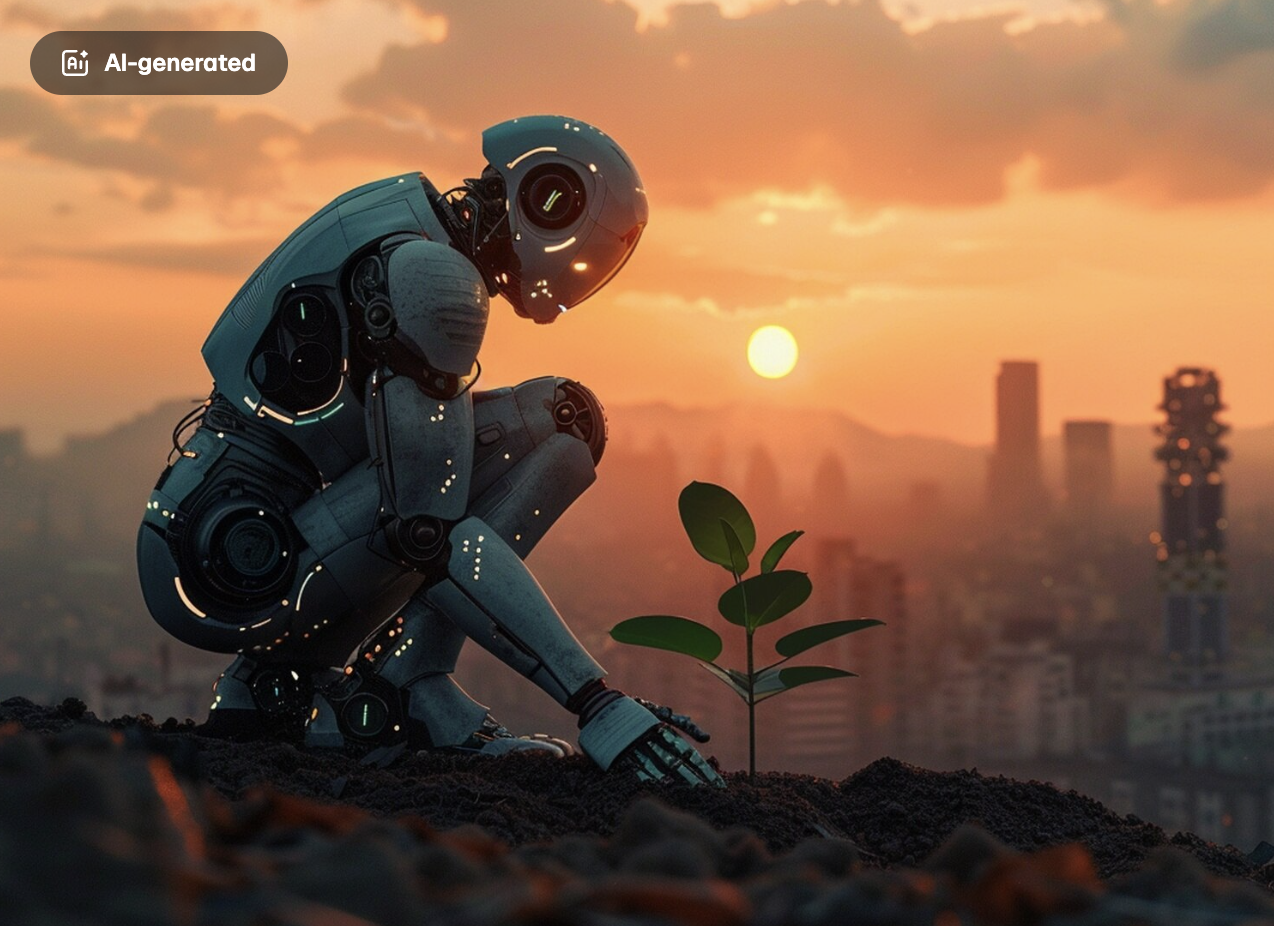
Remember when Artificial Intelligence felt like something happening far away, mostly in Silicon Valley research labs? If you look around today in 2026, that narrative has completely shifted. AI isn’t an abstract concept anymore—it is the invisible force running through our smartphones, local businesses, and daily routines.
Whether you are scanning a QR code for your morning filter coffee, navigating traffic in a crowded metro, or using a government service, AI is quietly working in the background. Ab AI sirf tech experts ke liye nahi raha; it has become a fundamental part of India’s digital backbone.
Solving Unique Indian Problems
India presents a unique environment for technology. We aren’t just one homogeneous market. We have over a billion people, dozens of languages, and vastly different needs across urban centers and rural villages. Building an app that works flawlessly for a corporate worker in Mumbai is one thing, but creating technology that genuinely serves a small business owner in a Tier-3 town requires deep, contextual understanding.
This is exactly what has changed over the past few years. Driven by strong public digital infrastructure and aggressive local innovation, AI has moved past answering simple questions. It is now actively solving hyper-local problems at an unprecedented scale.
Here is a look at how this technology has woven itself into our everyday lives in 2026.
The Quiet Evolution of Digital Payments
Let’s look at how we handle money. India processes billions of digital transactions daily. It is a massive system, and keeping it secure requires more than just manual oversight.
Behind every transaction you make, advanced AI algorithms are running complex checks in milliseconds. These systems look for abnormal patterns and flag potential fraud before the money even leaves your account. Aapka paisa safe rakhne ki responsibility ab sirf bank ki nahi, smart algorithms ki bhi hai. Furthermore, the data from your transaction history is now being used by AI models to offer instant micro-credit solutions directly through your payment apps, streamlining the way people access small loans.
Making Technology Speak Our Languages
For the longest time, the internet was a fundamentally English-first space. This created a massive barrier for millions of Indians. Today, that barrier is largely gone.
Through initiatives focused on regional languages and robust generative models trained locally, our devices finally understand us. You can dictate messages, search for government schemes, or interact with customer support entirely in Marathi, Tamil, Bengali, or Hindi. Voice-activated AI has transformed how people interact with services, ensuring that digital access is no longer restricted to those fluent in English.
Transforming Healthcare Delivery
Accessing specialized medical care outside of major cities used to require long journeys and high costs. In 2026, AI-assisted telemedicine has bridged that gap significantly.
Local clinics in smaller towns are now equipped with diagnostic tools powered by intelligent algorithms. These tools can analyze X-rays, spot anomalies, and provide immediate preliminary assessments. This acts as a crucial support system for local healthcare workers, allowing them to consult with city-based specialists efficiently and ensuring faster, more accurate diagnoses for patients who need it most.
Precision Agriculture Taking Root
Perhaps the most impactful application of AI is happening in our fields. Agriculture has moved beyond traditional practices and basic weather forecasts.
Today, AI models analyze complex data—ranging from satellite imagery to local soil sensors—to provide actionable insights to farmers. These systems can advise on the exact amount of water needed, the precise time to apply fertilizers, and even predict potential pest outbreaks based on micro-climate changes. By optimizing these resources, smart farming is helping increase yields while reducing unnecessary costs.
Practical Examples of AI in Daily Life
- The Independent Retailer: A small clothing shop owner uses an AI-powered inventory app that predicts local buying trends based on upcoming festivals, automatically suggesting stock adjustments to avoid over-ordering.
- The Student: A college student relies on an AI tutor that adapts to their specific learning style, explaining difficult engineering concepts through a conversational mix of English and their native language.
- The Commuter: Daily travelers use navigation apps that don’t just show traffic but use predictive AI to calculate route efficiency based on historical patterns, construction schedules, and real-time weather changes.
Tips, Warnings, and Expert Insights
As we integrate these technologies deeper into our lives, experts suggest keeping a few important things in mind:
- The Human Element Remains Essential: While algorithms are powerful, they aren’t perfect. In critical areas like medical diagnosis or legal document review, AI should assist human experts, not replace their final judgment.
- Be Mindful of Data Privacy: The personalization AI offers requires access to your data. Always use verified, secure applications and be aware of what information you are sharing online.
- Understanding Algorithmic Bias: AI systems learn from existing data. If that data is skewed, the AI’s decisions might be too. It’s important to remember that AI recommendations are tools for guidance, not absolute truths.
Important FAQs
Q: Is AI taking over all jobs in India? A: AI is causing a shift rather than a complete takeover. It is automating routine tasks but also creating new opportunities for individuals who can manage, oversee, and work alongside these intelligent systems.
Q: How is AI specifically helping rural communities? A: The biggest impacts are seen in language accessibility, allowing voice-based interaction with digital services, and in agriculture, where AI provides targeted advice to improve crop management.
Q: Are my digital transactions really safer with AI? A: Yes. AI systems continuously monitor the network for unusual activity, offering a layer of real-time fraud detection that is far quicker and more comprehensive than manual checks.
The Bottom Line
We are past the point of viewing AI as a novelty. In 2026, it is a foundational utility, working quietly behind the scenes of our apps, businesses, and essential services.
The true success of this technology in India lies in its application to real-world challenges. When technology integrates so smoothly that you stop noticing it, you know it’s working. As AI continues to blend into our daily routines, it is steadily helping to build a more efficient and connected India.
Meta Description: Explore how AI has seamlessly integrated into daily life in India by 2026. Learn about its real-world impact on digital payments, language accessibility, healthcare, and agriculture.